Preparing students for adulthood involves much more than helping them pass exams or complete assignments. Young people eventually have to manage schedules, communicate with professionals, make decisions, maintain records, explore careers, handle personal projects, and respond to situations they may never have encountered before. These responsibilities can feel overwhelming when students are expected to figure them out without prior practice.
A school can provide a useful setting for developing these abilities because students can learn through realistic examples before they are expected to manage everything independently. Lessons can incorporate career exploration, administrative tasks, decision-making exercises, creative projects, and scenarios involving common adult responsibilities.
The objective is not to turn every lesson into a life-skills course. Instead, schools can identify opportunities within existing programs to help students build practical knowledge, organization, and confidence. Giving students opportunities to practice these skills gradually can make the transition into higher education, employment, and independent living more manageable.
Teach Students How to Navigate Everyday Institutions
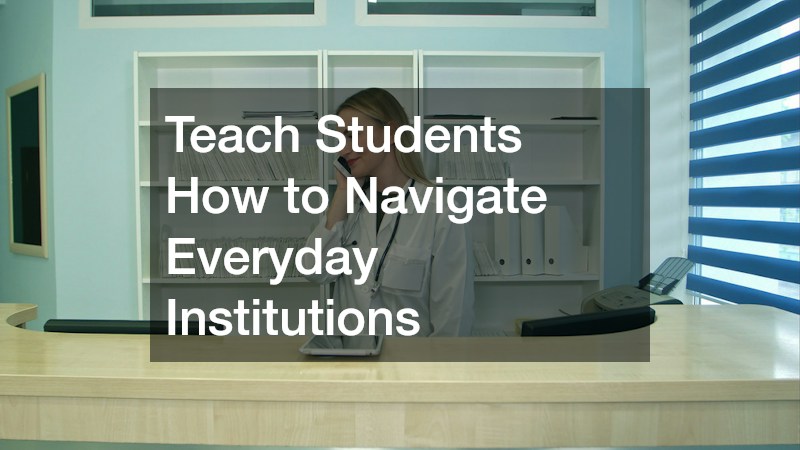
Adults regularly interact with organizations that have their own procedures, forms, deadlines, and communication methods. Students can begin developing these skills while they are still in school by learning how to find accurate information, identify the appropriate contact, complete paperwork, and follow a process from beginning to end.
A school can turn ordinary administrative tasks into learning opportunities. For example, students might practice completing a mock application, locating information on an official website, writing a professional email, or identifying which department handles a particular question. These activities can demonstrate that knowing where to find information is often just as important as memorizing information.
Useful skills to practice include:
- Reading instructions carefully before starting a task
- Identifying deadlines and required documents
- Asking specific questions when information is unclear
- Keeping copies of important records
- Recognizing official sources of information
- Following up when a response is required
Students should also learn that different institutions may use different procedures. Developing patience and persistence when navigating unfamiliar systems can be valuable long after graduation.
Build Career Awareness Through Practical Workplace Exposure
Career preparation is more effective when students can explore what different occupations actually involve. While academic subjects provide important foundations, students also benefit from understanding workplace responsibilities, training pathways, working environments, and the range of careers available to them.
Skilled trades provide a useful example. Learning about union electricians can introduce students to a career path that may involve structured training, practical work, safety responsibilities, and opportunities to develop specialized skills. The broader lesson is that students should investigate careers based on the work itself rather than relying on assumptions about particular occupations.
Schools can expand career exploration through:
- Job-shadowing opportunities
- Career fairs and workplace presentations
- Informational interviews
- Hands-on demonstrations
- Apprenticeship and training information
- Discussions with professionals from different industries
Students can also create career comparison charts that examine training requirements, daily responsibilities, work settings, and personal interests. This encourages them to think critically about what they want from a career instead of selecting a path based solely on popularity or outside expectations.
Give Students Practice Managing Personal Records
Organization becomes increasingly important as students move toward adulthood. They may eventually need to manage employment documents, academic records, schedules, applications, identification, financial paperwork, and other information. Schools can introduce these habits gradually by teaching students how to keep their information accurate and accessible.
Technology can support this process when it is used intentionally. The best student information system for private schools, for example, can give schools a centralized way to manage student information and communication. Students can learn from the broader organizational principles involved, including keeping information current, checking deadlines, and understanding how digital records are used.
Students can practice:
- Reviewing personal information for accuracy
- Tracking important dates
- Organizing digital documents
- Checking messages and announcements regularly
- Using calendars and reminders
- Protecting account credentials and personal information
Teachers can also explain that digital organization requires responsibility. Students should understand what information belongs in a particular system, who may have access to it, and why privacy matters. These habits can transfer naturally to college, employment, and other adult settings.
Introduce Students to Estate and Financial Planning Concepts
Financial and estate planning may seem distant to young students, but basic awareness can help them understand conversations they may encounter as they get older. The goal is not to teach students how to create complicated legal documents. Instead, educators can introduce basic terminology and explain why people make plans for their assets and responsibilities.
Revocable trusts provide one example of an estate-planning concept students may eventually encounter within their families or personal financial planning. A classroom discussion can explain that different planning tools serve different purposes and that legal and financial decisions depend on individual circumstances.
Age-appropriate lessons can introduce:
- The general purpose of estate planning
- The difference between ownership and beneficiaries
- Why people organize important documents
- The role of professional advisers
- How circumstances can affect planning decisions
Students should also learn the limits of general information. Legal documents can have significant consequences, so understanding when to ask a qualified professional for advice is an important adult skill in itself. This approach teaches students to gather information without assuming that a general example applies automatically to their own circumstances.
Explain When Professional Legal Guidance Matters
Students will eventually encounter situations in which professional assistance may be appropriate. Teaching them how to recognize those situations can be more useful than attempting to give them detailed legal knowledge about every possible issue.
Estate administration provides a straightforward example. A probate attorney may assist with legal matters that arise after someone dies, depending on the circumstances of the estate and applicable law. Students can learn that processes involving assets, documents, and family responsibilities may require specialized knowledge and careful attention to legal requirements.
Schools can use hypothetical scenarios to teach students how to respond responsibly:
- Identify the basic issue presented
- Gather relevant documents and information
- Avoid making assumptions about legal requirements
- Determine which type of professional may be appropriate
- Keep records of important communications
- Ask questions when instructions are unclear
This kind of exercise reinforces an important principle: being independent does not mean handling every problem alone. Knowing when a situation requires qualified assistance is part of becoming a responsible adult.
Prepare Students for Major Changes in Family Circumstances
Family circumstances can change in ways that affect housing, schedules, finances, education, and communication. Students do not need to become experts in family law, but they can benefit from learning how to respond calmly and responsibly when significant changes occur.
A separation lawyer is one example of a professional who may be involved when adults face certain family-related legal matters. In an educational context, the focus should remain on understanding the role of professional guidance and recognizing that family situations can involve multiple legal and personal considerations.
Students can practice broader skills such as:
- Communicating respectfully during difficult situations
- Keeping important documents organized
- Following established schedules and agreements
- Asking appropriate questions
- Identifying reliable sources of information
- Recognizing when an adult or professional should provide guidance
Schools should approach sensitive subjects carefully and avoid assuming that every student’s family situation is the same. General scenarios can teach practical decision-making without requiring students to disclose personal circumstances.
The larger lesson is that adulthood often involves adapting to changes while maintaining clear communication and organization.
Teach Students About Identity Verification and Documentation
Identification and verification procedures can become part of many adult responsibilities. Students may encounter them when applying for jobs, volunteering, pursuing certain licenses, entering particular professions, or completing other formal processes. Understanding the basic purpose of these procedures can make unfamiliar requirements less intimidating.
A mobile fingerprinting service can serve as an example when explaining how specialized identity-verification services may fit into certain administrative processes. Students can learn that requirements vary depending on the organization and purpose, so they should read instructions carefully rather than assuming that every application follows the same procedure.
Students can practice:
- Reviewing identification requirements
- Preparing required documents
- Scheduling appointments
- Confirming appointment details
- Protecting personal information
- Keeping copies of submitted paperwork when appropriate
Privacy should be part of the lesson. Students should understand that personal identification information should not be shared casually or submitted through questionable channels. Learning to verify who is requesting information and why can help students make safer decisions as they take on more independent responsibilities.
Connect Health Decisions With Responsible Planning
Young adults increasingly encounter health and wellness information through advertisements, social media, websites, and conversations with peers. Preparing students for adulthood should therefore include learning how to evaluate health-related claims and distinguish general information from individualized professional advice.
Discussions involving local providers for a vitamin IV drip, for example, can be used to teach students how to evaluate a wellness service rather than encouraging or discouraging a particular treatment. Students can learn to ask what a service involves, who provides it, what it costs, what qualifications are involved, and what information supports its use.
Important questions can include:
- What is the purpose of the service?
- Who provides or administers it?
- What qualifications are required?
- What risks or limitations should be considered?
- What information comes from a qualified healthcare professional?
- Where can reliable health information be found?
This approach gives students a transferable skill: evaluating health decisions carefully. They should also understand that medical or treatment decisions may require individualized guidance from an appropriately qualified healthcare professional.
Develop Creativity, Entrepreneurship, and Practical Skills
Creative activities can teach students practical abilities that extend beyond the finished project. An activity such as embroidery can involve following instructions, selecting materials, estimating costs, managing time, correcting mistakes, and completing a project to an expected standard.
Teachers can connect creative work to broader skills without requiring students to turn hobbies into businesses. A classroom project could involve designing an item, calculating material needs, establishing a schedule, and presenting the finished work. Students can then reflect on which steps went smoothly and which required adjustment.
A practical project might ask students to:
- Create a simple project plan
- Estimate materials and costs
- Set a completion deadline
- Track progress
- Evaluate finished work
- Present the result to others
These exercises teach students that useful skills often develop through repetition and attention to detail. Creative projects can also encourage patience and problem-solving because students have to respond when their first approach does not work.
The same principles can transfer to workplace assignments, household projects, academic work, and personal goals.
Teach Students to Plan and Participate in Important Life Events
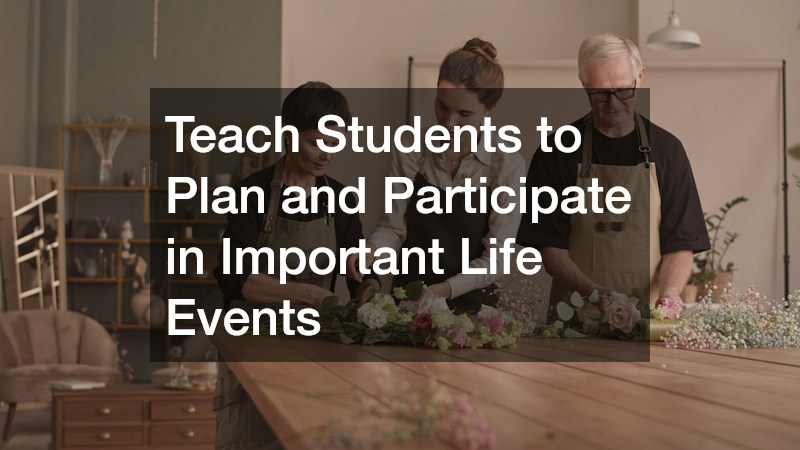
Planning an event allows students to practice multiple adult responsibilities at once. They must establish a goal, organize tasks, communicate with others, manage resources, and work toward a fixed deadline. These skills can be developed through classroom projects without requiring students to organize a major real-world event.
Floral arrangements can provide one example of how a creative task can involve planning and coordination. Students could develop a hypothetical event plan that considers the desired appearance, number of arrangements, available budget, timeline, materials, and responsibilities of different participants.
An activity might require students to:
- Establish the event’s purpose
- Create a realistic budget
- Develop a task list
- Assign responsibilities
- Set deadlines
- Plan for potential changes
- Present the completed plan
Teachers can then ask students to identify what could go wrong and develop backup approaches. This encourages flexible thinking rather than assuming that every plan will proceed exactly as expected. The exercise also demonstrates how large responsibilities become easier to manage when they are divided into specific tasks.
Preparing students for adult responsibilities is ultimately about giving them opportunities to practice skills before they are expected to manage those responsibilities independently. Academic knowledge remains important, but adulthood also requires organization, communication, decision-making, career awareness, record management, and the ability to recognize when additional guidance is appropriate.
Schools can build these abilities into existing educational experiences. Career exploration can expose students to different pathways and workplace expectations. Administrative exercises can teach organization and documentation. Creative projects can develop planning and problem-solving. Hypothetical scenarios can help students understand how professional services fit into unfamiliar situations without requiring them to make decisions beyond their experience.
The most useful preparation is practical and gradual. Students should have opportunities to make decisions, learn from mistakes, revise their approaches, and ask questions. By incorporating real-world responsibilities into the educational experience, schools can help students leave the classroom with greater confidence in their ability to navigate the systems, decisions, and challenges that accompany adult life.