The traditional benchmark of school readiness has undergone a quiet revolution. For generations, well-meaning parents prepared toddlers for academic life by drilling flashcards, chanting alphabet rhymes, and practicing rote numerical counting up to twenty. While early familiarity with symbols and letters offers a modest head start, cognitive science demonstrates that these surface-level skills do little to predict long-term intellectual adaptability, executive function, or vocational success. The modern world does not reward human beings simply for retrieving memorized facts; it rewards those who can dissect an unfamiliar challenge, formulate hypotheses, test constraints, and adapt when an initial attempt collapses.
The first five years of human life represent a neurological window of neuroplasticity that will never be replicated. During this formative window, billions of synaptic connections form in response to environmental stimuli, sensory engagement, and emotional relationships. When a young child is encouraged to tinker, dismantle, fall down, and re-evaluate, their developing brain builds the structural architecture of resilience and inquiry. Conversely, when early childhood is characterized by hyper-structured adult direction, constant digital screen sedation, and immediate parental rescue from the slightest frustration, the innate investigative instinct atrophies before formal schooling even begins.
Creating an Investigative Home Environment and Selecting Early Developmental Care
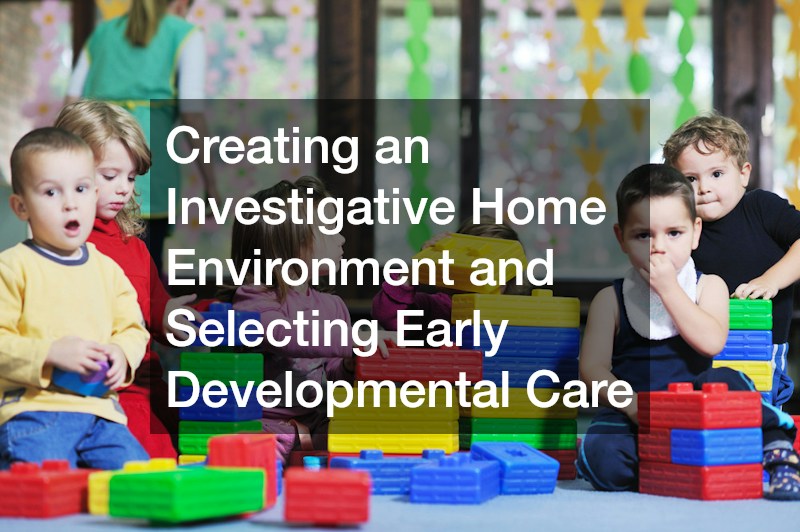
Every home is a living physics and chemistry laboratory, yet modern domestic spaces are often engineered to eliminate the very friction that sparks childhood problem-solving. When a toddler attempts to stack wooden blocks and the tower topples, the instinctive parental response is to step in, steady the base, and hand the child the final block. While born of love, this micro-intervention robs the young mind of an essential cognitive loop: observing a mechanical failure, evaluating balance and gravity, and recalibrating the approach through trial and error.
As children grow beyond the exclusive confines of the home, the quality of their primary care environments plays a profound role in either reinforcing or suppressing this exploratory spirit. Parents returning to the workforce face critical choices when selecting professional child care arrangements. High-quality developmental centers do not simply function as custodial holding areas; they serve as dynamic social testing grounds where toddlers encounter diverse temperaments, shared resources, and collective challenges.
When evaluating these early care centers, parents should look past superficial decorative themes and examine the behavioral patterns of the staff. Watch whether the caregivers allow children to resolve low-stakes social squabbles independently or rush to dictate resolutions. Observe if children have open access to open-ended materials or if their day is regimented into rigid twenty-minute teacher-directed blocks. A nurturing developmental environment balances emotional safety with sufficient physical and intellectual freedom, allowing children to test boundaries and build autonomous problem-solving instincts.
As children approach three and four years old, their expanding language and motor capacities demand a more intentional educational philosophy. Enrolling a child in a high-caliber preschool provides a vital bridge between home-based exploration and the collaborative expectations of primary education. Progressive early childhood educators utilize project-based and emergent curricula where lesson plans originate from the children’s spontaneous observations.
Immersive Experiential Learning and Multisensory Nature Exploration
The physical world offers a richness of sensory feedback that no two-dimensional digital interface can reproduce. When a young child plays outdoors in dirt, balances on an uneven log, or watches water carve a channel through wet sand, their brain integrates visual, vestibular, proprioceptive, and tactile inputs simultaneously. This sensory integration forms the foundation of spatial reasoning and physical mechanics. An essential duty of parents is to use the natural landscape as an unbounded, free laboratory where questions are continually generated by the environment itself.
Stepping into nature removes the artificial guardrails of indoor living and introduces children to unpredictable variables. A gust of wind suddenly alters the trajectory of a tossed leaf, river stones prove unexpectedly slippery beneath rubber boots, and dry twigs snap while green branches flex without breaking. Engaging directly with these natural phenomena helps young learners recognize causal relationships and construct internal mental models about the physical world.
Field excursions to curated cultural and biological centers can significantly amplify this natural curiosity when approached with an investigative mindset. A family visit to an aquarium, for example, should not be a passive walk past illuminated glass tanks, but an active scientific expedition. Rather than rapidly dragging a toddler from one display to the next, focus on deep, prolonged observation of a single ecosystem or species:
- Spend fifteen continuous minutes observing a tidal touch-pool, encouraging the child to describe the contrasting textures of a sea star’s rigid skin versus an anemone’s soft, retracting tentacles.
- Ask probing questions that highlight adaptation and biomechanics, such as “Why do you think the ray’s body is flat like a pancake while the shark is shaped like a torpedo?”
Upon returning home, parents can reinforce these field experiences by translating observational discoveries into hands-on construction challenges. Provide clay, recycled cardboard, water basins, and tempera paints, inviting your child to recreate the physical mechanisms they witnessed during the day. If they noticed how a sea turtle uses its front flippers like bird wings, challenge them to build a small boat or aquatic model that moves through bathwater using a similar paddle stroke.
Expanding Linguistic Agility and Cognitive Plasticity Through Multilingual Exposure
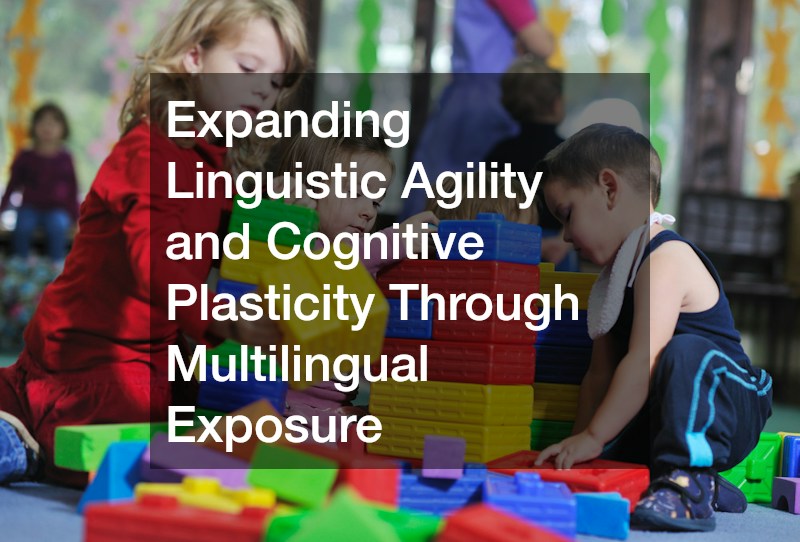
Language acquisition is inextricably linked to cognitive development and problem-solving capacity. When a child learns to communicate, they are not simply acquiring labels for physical objects; they are building a conceptual framework for categorizing the universe, expressing abstract relationships, and regulating their own emotional impulses. Exposure to multiple phonetic systems and grammatical structures during early childhood enhances neuroplasticity, fostering cognitive flexibility and superior executive function.
Children exposed to linguistically rich environments display higher levels of divergent thinking, pattern recognition, and working memory. Because a multilingual child must constantly decipher context, suppress inappropriate vocabulary options, and switch between linguistic frameworks, their prefrontal cortex receives continuous exercise. This cognitive agility directly translates into academic problem-solving, enabling young thinkers to view complex problems from multiple angles rather than remaining fixated on a single solution path.
Families residing in or traveling through cosmopolitan educational hubs often enjoy unique access to specialized immersive language academies. For instance, enrolling a young child in a progressive French class in Singapore exposes them to authentic native linguistic cadences and cultural idioms within a highly multicultural, educationally demanding environment. In such international centers, language instruction moves far beyond rote grammar exercises, embedding the new language directly into interactive music, theatrical storytelling, culinary discovery, and tactile artistic creation.
When evaluating any early language enrichment program or educational offering, parents must assess the underlying instructional approach. The best class for early childhood development is never one where toddlers sit passively at desks filling out tracing worksheets or repeating phrases mechanically off a screen. High-impact early education relies on conversational interaction and embodied play:
- Seek out programs that employ full immersion methodologies, where the instructor communicates through expressive body language, physical objects, and meaningful real-time actions.
- Ensure the learning environment incorporates dynamic sensory props, such as baking ingredients, puppets, botanical specimens, and rhythm instruments, linking vocabulary to tangible physical experiences.
Integrating linguistic problem-solving into daily household routines does not require parents to be fluent in multiple languages. You can encourage cognitive plasticity by playing simple verbal games that explore alternative meanings, rhymes, and classifications. Challenge your four-year-old to describe an everyday household object without using its name, or introduce games where familiar objects are assigned creative, temporary rules (such as imagining that every wooden chair is an island that cannot be stepped off of). These playful cognitive exercises teach the developing brain that rules can be systematically formulated, understood, tested, and modified to achieve a specific goal.
Navigating Independent Early Learning Institutions and Nurturing Autonomy
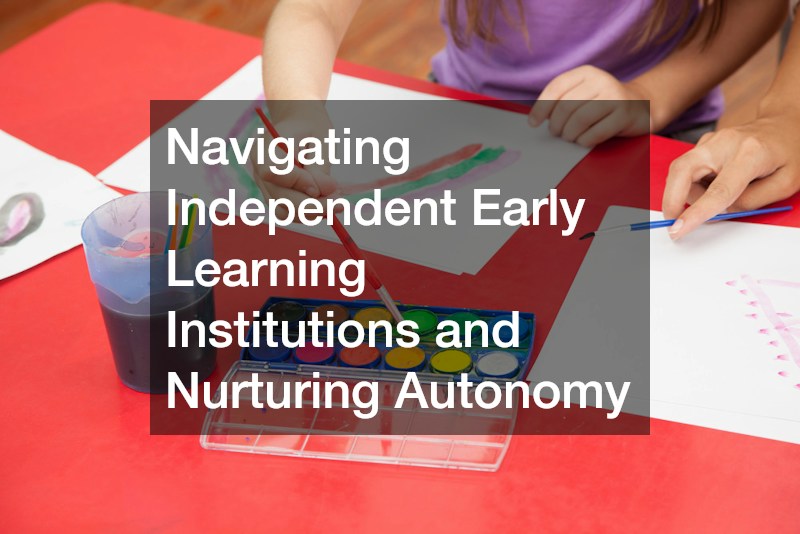
As children move through the toddler years into early childhood, the educational institutions they inhabit become powerful forces in shaping their worldview. While public school systems provide valuable foundational education for millions of students, independent learning centers often possess the structural flexibility, lower teacher-child ratios, and architectural freedom required to pioneer advanced inquiry-based methodologies. When parents evaluate their options, examining independent developmental centers provides valuable insight into how pedagogical environments influence a child’s confidence and autonomy.
Dedicated independent early learning centers and high-tier private preschools frequently design their interior and exterior spaces around progressive childhood philosophies such as the Reggio Emilia approach, Montessori methods, or Forest School principles. In these carefully curated spaces, the physical classroom functions as a “third teacher.” Every shelf, reading nook, light table, and outdoor water feature is designed to invite self-initiated exploration without requiring constant adult mediation:
Parents who choose to invest in independent educational pathways often evaluate the broader philosophy that governs established private schools. These institutions tend to offer cohesive, multi-year developmental pipelines that guide a child smoothly from the toddler years through high school graduation. Because these academies operate without the restrictive mandates of standardized state testing regimens, their faculties have the latitude to design rich, thematic curricula that emphasize inquiry, critical dialogue, and deep project-based investigations over simple test preparation.
A truly supportive early learning institution respects the young child as a capable, competent thinker. When a preschool culture honors a child’s questions, encourages calculated physical and intellectual risks, and views unexpected failures as valuable data, it provides an enduring psychological foundation. Children who experience this type of early education enter their elementary years not as passive pupils waiting to be instructed, but as active researchers eager to understand and shape the world around them.
Mapping Long-Term Academic Pathways and Elementary-to-Middle School Transition

While early childhood may feel disconnected from the academic challenges of adolescence, the learning habits, emotional resilience, and problem-solving frameworks cultivated prior to kindergarten cast a long shadow over a child’s future educational trajectory. A child who learns early that confusion is merely the first step toward discovery approaches difficult mathematical concepts, scientific experiments, and literary analyses with enthusiasm rather than anxiety. As parents nurture these early instincts, it is prudent to understand how primary and secondary educational environments sustain and elevate these core competencies over time.
When transitioning from early childhood centers into primary education, families must seek out learning environments that preserve and expand upon this investigative spark. The nation’s best private elementary schools distinguish themselves by rejecting passive rote memorization in favor of rigorous, hands-on scientific and humanistic inquiry:
- Look for elementary programs that integrate comprehensive STEAM (Science, Technology, Engineering, Arts, and Mathematics) curricula directly into daily homeroom work rather than isolating it as an occasional auxiliary class.
- Examine the school’s literacy instruction to verify that it emphasizes critical analysis, historical context, and creative composition alongside foundational phonics.
As children navigate late childhood and approach early adolescence, their cognitive capacities undergo another profound transformation. The brain begins pruning unused neural pathways while strengthening high-traffic circuits, transitioning from concrete operational thinking to abstract conceptual reasoning. During this sensitive developmental phase, typically spanning grades six through eight, the educational environment must challenge students with elevated analytical rigor, independent laboratory research, and structured debate.
Enrolling a developing student in one of the best private middle schools ensures that their emerging analytical abilities are met with sophisticated academic challenges and supportive mentorship:
- Top-tier middle school academies incorporate formal logic, introductory philosophy, and Socratic debate into their humanities programs, teaching students how to identify cognitive biases and construct persuasive arguments.
- Science instruction shifts from surface-level descriptive biology to rigorous, student-led experimental design, requiring adolescents to formulate testable hypotheses, isolate independent variables, and write professional lab reports.
Identifying the best schools for your child’s long-term educational journey requires developing a clear, customized evaluation framework that balances academic rigor with personal institutional fit. No single educational institution is universally ideal for every student; a hyper-competitive, high-pressure academy that inspires one young thinker might overwhelm another who thrives within a smaller, project-based environment.
When visiting prospective campuses, look closely at the student body: observe whether the students appear genuinely engaged, curious, and comfortable asking challenging questions of their instructors, or if they merely display passive, compliant obedience. An institution that produces truly capable thinkers is one that values original inquiry, welcomes thoughtful dissent, and views education as an ongoing journey of discovery rather than an exercise in credential collection.
The greatest gift parents can give a young child is not an early head start in academic memorization, nor an overprotected path free from confusion and frustration. The ultimate foundation is the quiet, unshakable confidence that comes from knowing how to encounter an unfamiliar problem, navigate through confusion, and arrive at a solution through creative resilience.
By resisting the urge to manage every outcome, curating rich sensory and linguistic experiences, and prioritizing environments that celebrate curiosity over compliance, you provide the spark that drives their intellectual growth. The journey through childhood and education will present countless unforeseen challenges; a child equipped with a resilient problem-solving engine will not fear those hurdles, but will meet them with eager eyes, steady hands, and an unquenchable desire to discover what lies ahead.